Airports are fantastic places to test a travel eSIM. You have downtime, Wi‑Fi to download the profile, and immediate feedback once you exit customs and your phone switches to cellular. With a careful setup, you can try eSIM for free or at very low cost, confirm coverage where you’re headed, and walk out with working data without touching a kiosk or swapping a plastic card.
I’ve set up eSIMs at more than a dozen airports, from Heathrow to JFK to Changi. The routine is simple, but the details matter. Plans vary by region, carriers throttle trial data differently, and not every phone handles multiple eSIMs the same way. This guide focuses on getting a free or near‑free eSIM trial working while you wait at the gate, plus the practical judgment calls that save you headaches once the plane lands.
Why test at the airport in the first place
Airports give you the trifecta: steady Wi‑Fi for downloads, easy access to power, and a safe test environment. If the eSIM free trial activates cleanly over Wi‑Fi, odds are you’ll have smooth service once you reach the city. If it doesn’t, you have time to adjust before boarding. You’ll also avoid standing at an arrivals counter arguing about data bundles after an overnight flight.
Airlines oversell the idea that “inflight Wi‑Fi keeps you connected.” In reality, it’s usually slow and unreliable for eSIM activation. Doing it at the gate means your phone will already be provisioned. When you land, the network connection happens automatically, and you can book a rideshare or message your host without chasing airport Wi‑Fi portals.
What “free trial” actually means with eSIM
Plenty of providers advertise an eSIM free trial, a mobile eSIM trial offer, or a $0.60 teaser for first‑time users. What you actually get falls into a few common patterns:
- True free bucket: typically 100 to 300 MB, sometimes 1 GB for a short window. Enough to validate coverage, check messaging, and load maps for a few neighborhoods. Nominal charge trial: the eSIM $0.60 trial type. The fee unlocks 1 to 3 GB for a few days. Good for a weekend trip or a longer shakedown before committing. Free eSIM activation trial with required verification: some carriers ask for a credit card on file or identity step to discourage abuse, then grant a small data allotment for 24 to 72 hours. Region‑specific promotions: an eSIM free trial USA or a free eSIM trial UK may exist seasonally. If you don’t see a banner in the app, ask support via chat. I’ve had agents attach trial packages manually.
You can test without spending anything if you only need to confirm basic connectivity. If you’re determined to find a cheap data roaming alternative that actually supports streaming, you’re better off with a low‑cost eSIM data package priced under a dollar, then upgrading to a short‑term eSIM plan or prepaid eSIM trial that fits your stay.
Compatibility check before you leave home
Not every phone accepts a digital SIM card. Most iPhones from XR/XS onward support eSIM. Many Google Pixel models and recent Samsung flagships do as well. Budget Android phones are hit or miss, and some carrier‑locked devices restrict eSIM profiles from third‑party providers. If you’re coming from the US, Verizon and AT&T iPhones generally work fine with international eSIM free trial plans, but some locked devices require using the carrier’s own international add‑on unless you unlock first.
On iOS, head to Settings, then hit General, then About. Look for an EID number and “Digital SIM” support in the cellular section. On Android, the wording varies, but you’ll see SIM Manager or eSIM in the Network settings. The presence of an EID is a good sign. If your phone supports multiple eSIMs, you can keep your home line for calls and add a prepaid travel data plan for data only. That duality is the entire point.
Bring your device fully updated. Old carrier bundles can break activation. I’ve watched an activation fail repeatedly in Helsinki, only to succeed after an iOS carrier settings update that took twenty seconds.
What to prepare before you get to the gate
If you want to try eSIM for free without friction, prepare a couple of things at home. Create an account with a few reputable providers and verify your email or phone number. If you’re planning to buy a cheap plan, add a card to your account so you can complete the checkout in a couple of taps without entering numbers over airport Wi‑Fi. Screenshots of your device IMEI and EID can help if you need support.
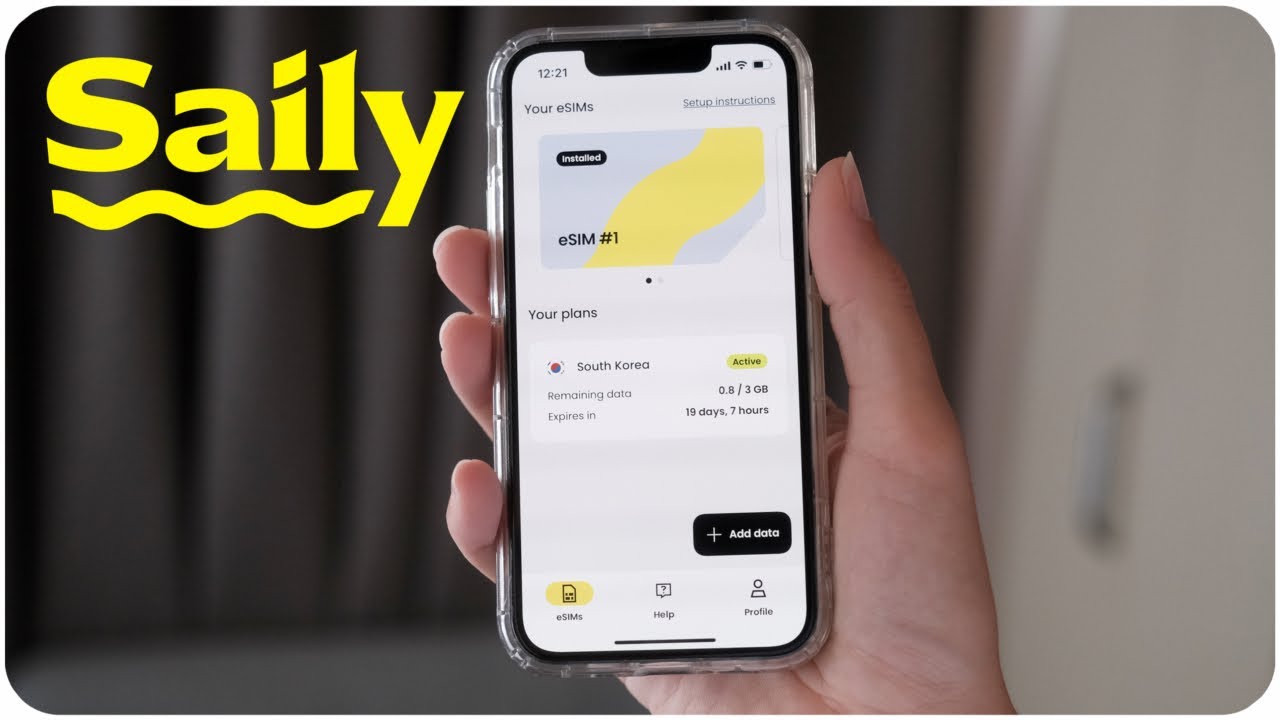

Some providers require camera access to scan a QR code, while others push an “install” button using an in‑app method. Either works. Keep your passport handy only if a provider requires KYC in the destination country. Many global eSIM trial plans skip KYC when they sell data‑only service, but national carriers may require it, particularly in parts of Asia and the Middle East.
The airport setup: a simple, reliable flow
Here is a compact routine that consistently works when I activate an eSIM trial plan at the airport:
- Connect to the airport’s official Wi‑Fi, then open a browser to clear any captive portal. Confirm you can load a page like example.com. Reduce variables. Turn off your physical SIM’s cellular data and roaming temporarily, but leave it enabled for voice if you care about incoming calls. This isolates the eSIM for testing. In the eSIM app, choose the destination or a global eSIM trial if you’re transiting multiple countries. If there’s a toggle for “data only,” pick that and leave voice/SMS off. Activate the free eSIM trial or the $0.60 tier. Install the profile. When asked about default lines, choose the eSIM for cellular data only. Keep your home SIM as the default for calls and iMessage if you need it. Once the eSIM shows as installed, toggle airplane mode on for 10 seconds, then off. The eSIM should register on a partner network. Open a map and a messaging app to confirm live data.
That’s your first list. The second one comes later for troubleshooting. Everything else we’ll cover in prose.
Most apps guide you through these steps, but it helps to set expectations. After activation, a SIM status delay of 30 to 120 seconds is normal while the device negotiates with the local network. If you see “No Service,” wait a minute, then try the airplane toggle. Only if the eSIM still shows no network should you explore manual network selection in Settings.
Picking the right trial plan for your route
The free eSIM trial USA offers differ from what you see in Europe or Asia. In the US, I’ve seen 100 to 250 MB trials that expire within 24 hours, meant for quick validation rather than sustained use. In the UK, the free eSIM trial UK sometimes grants a day pass with a cap. In Southeast Asia, a few providers lean on a $1 or less micro‑bundle because data is cheaper wholesale, and they still call it a trial. Any of these options confirm coverage and speed, which is the point.
If your itinerary hops across borders, choose a global eSIM trial or an international eSIM free trial tier that explicitly lists your destinations. Policies vary: some plans allow 30 to 50 countries but throttle heavily on partner networks; others target a smaller set with better speeds. A trial eSIM for travellers risks losing steam if the plan “roams” within its own region and deprioritizes you at busy times.
A practical trick: skim the APN and partner network notes in the plan details. If the plan gives throttle thresholds at 1 to 3 GB, assume your top speed will fall after a few gigabytes even if the package advertises “unlimited.” For a weekend city trip, a mobile data trial package with 3 to 5 GB at full speed is comfortable for maps, rides, light social, and the occasional video. For a week, 7 to 10 GB feels safe if you avoid heavy uploads.
Airport Wi‑Fi pitfalls that derail activation
Captive portals can be sly. You think you’re online, but DNS is blocked until you accept terms. Some airports drop connections every 30 minutes. If your eSIM install fails midway, the QR handshake may time out. Fix it by reconnecting to Wi‑Fi and relaunching the install flow. If the app supports “manual install,” you can enter the SM‑DP+ address and activation code to retry.
Remember that metal and glass terminals can create dead Wi‑Fi pockets. Move closer to the boarding area or a lounge where access points are denser. I’ve also had better luck with my own phone used as a hotspot for a secondary device’s eSIM install, but that takes planning. If you’re traveling with a companion, borrow their hotspot for the minute it takes to push the profile.

How to keep your main number reachable
Most travelers want to avoid roaming charges while still receiving calls or texts to their home number. Modern phones make this easy. Keep your home line active for voice and SMS, but set the eSIM as the data line. Disable data roaming on the home SIM so it never consumes foreign data. For iMessage and WhatsApp, verify that registration sticks to your existing number. Then, when you arrive, your apps will use the eSIM for data while your regular number remains visible to friends and banks.
Some banks send one‑time passwords by SMS. If you expect that, test before departure by turning off data on your home SIM, leaving it on for voice only. Send yourself a code from a bank app to confirm you still receive it. If your home carrier’s network is strict, you might need a momentary toggle of roaming to catch SMS over LTE. Turn it off again immediately to avoid accidental data use.
Speed checks that actually reflect on‑the‑ground performance
A synthetic speed test inside a terminal is not a fair proxy for the city. Airports often have congested cells, and international roaming traffic may be deprioritized. My approach: load 3 to 5 recent images on a news site, open a map and pan a couple of neighborhoods, then send a photo over a messaging app. If those feel snappy, the plan is viable. If it crawls, you can still switch to a different provider before boarding.
I keep three reference experiences in mind:
- In London, a free eSIM activation trial gave me 5 to 8 Mbps in Heathrow’s arrivals hall on a partner network. Outside the airport, speeds jumped to 40 to 80 Mbps. In New York, a nominal‑fee plan showed 20 Mbps near the gate at JFK, then 100 Mbps in Midtown on mid‑band 5G. In Tokyo, a regional plan tested poorly inside Narita, then stabilized at 30 to 60 Mbps in the city on LTE with perfect reliability.
If you can, test both an uplink and downlink action. Photo backups are the silent data hog that ruins small trial buckets. Disable automatic cloud backup until you settle on a plan.
When to buy a plan instead of clinging to a free trial
A prepaid eSIM trial is perfect for quick checks. But if your trip depends on smooth maps and messaging, buy a short‑term eSIM plan that matches your itinerary. Free tiers can cut off at a critical moment. I’ve seen them expire mid‑ride, which confuses drivers, or throttle to sub‑1 Mbps in dense areas by early afternoon. A low‑cost eSIM data package in the $3 to $10 range for a few gigabytes removes that uncertainty.
If you’re hopping between countries, a temporary eSIM plan that spans the region often beats stacking single‑country SIMs. There are trade‑offs. Regional plans can be more expensive per GB and sometimes sit on less‑preferred partner networks. On the other hand, one plan working across 15 or 30 countries reduces admin overhead and keeps your number stable.
Edge cases: dual SIM quirks, VPNs, and hotspot rules
Dual SIM behavior is polished on iOS and recent Pixels, but there are exceptions. Some Android builds struggle with default line selection after you install an eSIM. If you see calls failing or iMessage switching numbers, revisit the default settings and explicitly tag your home line as “Primary” for calls and your eSIM as “Data.” Reboot once to lock the choice in.
VPNs can complicate trial validations. A few providers check the IP location during activation and while metering. Disable your VPN during install and the first registration. Re‑enable it after the eSIM shows data flowing. If speeds drop dramatically with the VPN on, your provider may be sensitive to tunneled traffic. Switching to a split tunnel for maps and messaging often solves it.
Hotspot usage in trials is unpredictable. Some free tiers block tethering entirely. If you need to work from a laptop, verify hotspot permission in the plan details. A fully paid plan usually enables it. On iOS, if Personal Hotspot won’t toggle, confirm that the APN field is filled by the profile. Empty APN fields often correlate with blocked tethering.
Choosing providers like a pragmatist
Comparison charts can be noisy, but a few patterns have held up over many trips:
- Look for clear country lists, transparent throttle points, and honest disclaimers about 5G availability. A plan that admits “LTE only in X country” is often more reliable than one that promises 5G everywhere and delivers neither. If a provider offers both an eSIM free trial and small paid tiers, read the fine print on top‑ups. Some make it easy to convert a trial into a paid plan without re‑installing the profile, which saves time and prevents configuration drift. For the US and UK specifically, I’ve found that domestic carriers’ own prepaid eSIMs give the best speeds, while international resellers win on price and multi‑country convenience. If you care about peak train‑hour reliability in London or Chicago, a local carrier plan often performs better during congestion.
I avoid naming a single “best eSIM provider” because performance changes as wholesale deals shift. Instead, I keep two accounts ready. If my first test sputters, the second gets a quick trial. That redundancy has saved me in Madrid, Seoul, and Austin when one partner network had a temporary issue.
Troubleshooting in five focused moves
If your free eSIM trial doesn’t light up right away, these steps solve the majority of problems without escalating to support:
- Check the basics: Wi‑Fi off, mobile data on for the eSIM line, data roaming enabled on the eSIM, and your home SIM data roaming off. Toggle airplane mode for 10 seconds, then off. This forces a fresh registration attempt. Manually select a network in the cellular settings. Pick a different partner if available, then return to automatic after a successful attach. Reset network settings only as a last resort, because it nukes saved Wi‑Fi and Bluetooth pairings. If you do reset, install the eSIM profile again to be safe. If activation codes are stuck, switch to the manual SM‑DP+ entry and confirm the EID matches your device.
That’s the second and final list. Keep your lists scarce, and your travel problems often are too.
How to avoid roaming charges without missing important calls
The ideal setup for most travelers is simple. Keep your primary number active, but starve it of data. Turn off data roaming on your home SIM, and leave it on for calls if you need to receive them. In your messaging apps, stick with your existing number so contacts don’t have to learn a temporary one. For two‑factor codes, make sure SMS works or switch your authenticator apps to time‑based codes before departure. A few banks still insist on SMS only; test once at the gate before you take off.
If you truly don’t want any chance of voice roaming, set your home line to “off” for cellular and rely on Wi‑Fi calling with a known app. That’s clean, but you lose conventional call reachability until you flip it back on. Travelers with strict expense policies often prefer this, because it removes the risk of accidental roaming charges entirely.
When a physical SIM still wins
Despite the convenience of digital profiles, there are scenarios where a plastic SIM card earns its keep. Rural coverage is the classic example. In parts of southern Italy and along the Scottish Highlands, a local SIM from the incumbent carrier found better fringe connectivity than international eSIMs borrowing a third‑tier partner. I’ve also seen local SIMs provide stronger uplink in crowded events, like festivals or sports finals, where roaming users were deprioritized.
For most city trips, eSIM wins on ease, flexibility, and the ability to swap plans without hunting for shops. For off‑grid or specialist use cases, a physical card from the dominant local carrier remains the gold standard. If your itinerary includes both, start with a trial eSIM for urban legs and pick up a local SIM when you head rural.
Cost control that actually works
Data usage surprises come from two sources: automatic updates and media‑heavy messaging. Before you board, disable background app refresh for photo storage and cloud drives. Tell your phone not to update apps over cellular. In WhatsApp and similar apps, set media auto‑download to Wi‑Fi only. If you use maps, download offline areas for the city center and any day trips. That can cut live data use by half and make small trial buckets last long enough to judge a provider fairly.
If you lean on a prepaid travel data plan, check your app’s “remaining data” tile nightly. Some plans measure in 100 MB blocks, and rounding means you lose a little with each session. If you know you have a heavy day tomorrow, pre‑purchase a top‑up while you’re on hotel Wi‑Fi. Airport security lines and jet bridges are the wrong places to fix a zero‑data banner.
Notes on regional behavior: US, UK, EU, and Asia
In the US, mid‑band 5G can be excellent in cities, but building penetration varies. Trials can look slower indoors, then pop outdoors. If a trial caps you at small numbers, expect 5 to 20 Mbps inside terminals and much higher downtown. Many trial packages connect you to a major carrier’s network but limit speed via the APN. Don’t mistake a capped 10 Mbps trial for the network’s true capacity.
In the UK, even small towns often https://soulfultravelguy.com/article/esim-free-trial have solid LTE. eSIM offers for abroad frequently include the UK at attractive rates, which makes it a good place to experiment. If you plan to hop to the EU on the same trip, a regional plan labeled as Europe is more convenient than single‑country plans, with predictable pricing across borders.
In the EU more broadly, competition keeps prices reasonable, and several providers offer a global eSIM trial that performs well in Schengen. Watch out for fair use policies on “unlimited” plans. They can drop you to 256 or 512 kbps after a few gigabytes.
In East and Southeast Asia, international mobile data is often inexpensive, and the networks are consistent in major cities. Speeds are usually excellent on LTE, and 5G is widespread in places like South Korea. Identity requirements vary. If a provider insists on passport verification, either complete it at the airport with a steady Wi‑Fi connection or pick a different plan that skips KYC for data‑only service.
What a smooth airport eSIM experience feels like
A good run looks like this: you sit at the gate fifteen minutes before boarding, connect to Wi‑Fi, and open your chosen app. You pick a trial eSIM for travellers in your arrival country, hit Install, and watch the profile appear in your cellular settings. You mark it as your data line, leave your home number for calls, toggle airplane mode once, and then you’re online. You confirm messaging, map a route from the airport to your hotel, and send your host a quick note. You board with the quiet confidence that when you step off the plane, your phone will be live before your bag hits the carousel.
If, instead, the trial feels sluggish or fails to register, you use your second account and repeat the process. This redundancy at the airport beats scrambling in arrivals. Once you confirm the network feels right, you can either ride the free bucket for basic navigation or pay a few dollars for a larger package that carries you through the first days. Later, at the hotel, you can decide whether to keep the plan, switch to a local carrier’s prepaid eSIM, or stack a regional package for onward travel.
Final practical advice
Think of the eSIM trial as a dress rehearsal. Your goal is not to consume the most free megabytes, but to answer a few binary questions: does the phone register quickly, do maps and messages snap open, and does the network behave predictably when you move around? Once you know that, spend a small amount to remove uncertainty for the rest of the trip.
A handful of habits do the heavy lifting. Update your phone before you leave home. Keep two provider accounts ready so you can pivot. Disable background sync until you confirm speeds. Turn off data roaming on your home SIM to avoid roaming charges while keeping your number reachable. Above all, do the setup while you have stable airport Wi‑Fi and time to correct anything odd.
With that rhythm, a free eSIM activation trial becomes more than a gimmick. It’s a quick systems check that sets the tone for a trip where your phone quietly just works. You walk past the SIM counters, skip the paperwork, and get on with your day.